Thursday, October 16, 2014

Landscape Design Tips - Planting in Layers

Landscape Design Tips: Planting in Layers

To keep your garden full of color, texture and plant variety, try a new approach to gardening, planting in layers.  Planting in layers is an idea that drove the gardens of the 20th century. Traditionally the English Garden consisted of three layers, specifically three layers of perennials.


Today the theory of layering focuses on the idea that plants grow in clusters and drifts and overlap and interlock as they merge. This adds a greater level of interest to the garden.


 Planting in layers allows for trees and shrubs to be located in the back, intermediate plants in the middle and shorter plantings in the foreground. Not only does this type of planning avoid monoculture design, but it provides greater habitat and food sources for bees, butterflies and birds but it staggers blooming, making your garden color last all summer.  


Vertical layering is the staggering of plantings in height, while horizontal layering adds variety on the ground plane. By grouping your plantings in clusters of 3 to 5 plants, each layer provides greater interest. Overlap the plantings for a flow, but remember to give the plants enough room for their size at maturity. By grouping the planting, a pattern can be created of texture and form. Use a zig-zag pattern to draw the eye into the design.  While playing with the idea of layering in your yard, try substituting a large hedge or tree for a trellis in the third layer. Pick a trellis with an artistic design or a simple trellis for use as a growing medium. It can be used as a focal point and add more variety to the design.

Are you an apartment dweller and want to try these layering techniques but don’t have a yard? Try layering in a container. Introduced by the Dutch, bulb lasagna is a way to bring the garden to your apartment window or balcony. 


Bulb lasagna is the layering of bulbs in containers. When using this method, choose bulbs with less foliage so the bulbs are not competing for space. Using a large pot, or garden container, put a layer of compost or soil rich in organic matter and the base of the pot. Layer daffodil bulbs at the base, and then add a layer of compost. In the second layer add tulips and again cover with compost. Finally add dwarf bulbs and cover with another layer of compost or soil. Then follow a once a week watering schedule and wait for buds, then blooms. This process works both in traditional gardens and container gardens and extends the period of blooming.


 Leave comments to let us know if you have ever tried this method or if you will attempt this method of layering and bulb lasagna this fall!

Friday, July 18, 2014

Cartwright Canyon Residence

Cartwright Canyon Residence

Existing Conditions:

 Located in the Boise Foothills this backyard has the challenge of a steep vertical incline. The front yard is comprised of a driveway and additional hardscape that will remain untouched in this design. An existing fence runs the perimeter of the backyard.


The backyard has a deck located off the second floor of the home. The second floor deck hangs over a ground floor deck. The ground floor deck has a seat wall marking its edge. Surrounding the deck is a small turf pad, with scattered stepping stones. 


A rock retaining wall lies where the grass pad ends, at this point the steep incline of the backyard begins. The hill is adorned with native grasses and a few red doiser dogwoods, but the hillside is unusable due to its steep nature. There are steps that traverse the hillside from the grass pad by the house. The steps extend up to the northern tip of the property boundary. The steps are deteriorating and unsafe. The yard was lackluster at this point, yet held full potential to aid in the marvel and woe of living on the hillside of the Boise Foothills.


Design: 

To make this yard more livable, a tiered deck was introduced, extending further and climbing higher into the hillside than the previous deck. This project was installed by Sterling Landscape.


A shade structure was extended from the existing second story deck. 


A water feature was implemented next to the deck, for a focal point, as well as to attract birds and create subtle sounds of tranquility. 


A paver patio replaced the previous turf area and leads to the new staircase.


The staircase is reconstructed and engineered for stability, now welcoming to people of all ages. 


Lush plantings adorn the retaining wall planter bed.


Through the use of a rock wall that surrounds the deck, boulders and the stone slab staircase, texture is added to the space. A gas fire place is located at the focal point of the tiered deck. 


Rich, lush, native plantings add color and interest to the hillside.

Vendor Spotlight - Idaho Patio


Advertisement

Vendor Spotlight:
 Idaho Patio
http://www.idahopatio.com/

Have a great outdoor space but can’t use it because it’s too hot, too sunny or not safe? Idaho patio can help! Offering a range of products from patio covers, awnings, shade screens, screen rooms, hand rails and patio misters. Idaho Patio can transform your patio. Idaho Patio also offers free estimates, warranty coverage, custom design services, knowledgeable employees with excellent customer service and in-house financing options. For more information call Idaho Patio at 208-608-5550, or stop by, Idaho Patio is located at 11760 W Executive Drive Boise, Idaho.

Idaho Patio was responsible for the design and implementation of the kitchen area and the shade structure in the project below, which is located in the Bridgetower neighborhood in Meridian, Idaho. It is a great example of the beautiful work Idaho Patio does!


With the summer heat - now is a great time to add a shade structure to your yard... Make you space livable and enjoy the great outdoors!!!!  Stop By Idaho Patio's Showroom to check out the latest in shade structures, outdoor kitchens and more!!!  


http://www.idahopatio.com/


Landscape Contractor Spotlight


Advertisement

Landscape Spotlight: 

Green Lawn Care and Landscape, Incorporated
http://www.greenlawncareinc.com/

Green Lawn Care can help you tackle your lawn maintenance and landscape projects. With knowledge from over twenty years of experience, Green Lawn Care can aid in lawn mowing, pest control, water features, irrigation, pavers, stonework and snow removal and much, much more!!.


No project is too big or too small -Green Lawn care does it all. From maintenance, installation and repair, Green Lawn Care is there for all phases of your landscape’s lifecycle. Call today at 208-376-4967, or stop by, Green Lawn Care is located at 4580 Henry Street Boise, Idaho.


Landscape Design Tips

Landscape Design Tips: 
Plan for Maturity, Not Instant Gratification


When planting a garden, a grove or a tree, plan for maturity. Give plants enough space to grow to their full potential. Placing plants too close together, which is tempting because it makes your garden look fuller, will stunt the plants hindering their ability to grow as lush and full as possible. Think about the roots of plants and trees, they are similar to glaciers, where the top portion which is above ground is only about 50% of the whole plant. When plants are placed too close there isn’t enough room for proper root growth, which will harm the plant or tree.


 Consider the placement of the plant or tree. For example, planting a deciduous tree outside your window with southern exposure will be a great way to keep your home cool and shady in the summer and allow sun to penetrate indoors in the winter, but keep in mind, the tree will grow. Limbs extend and proximity will be shortened. There are also power lines to consider in many neighborhoods. If you plant a tree in close to proximity to a power line they are likely to get butchered by the city tree maintenance in an effort to keep the limbs from stretching towards the lines. 


Think about the shade planting a tree will provide, this is often a good thing, as it helps in addressing urban heat island effect. Yet, if you have a vegetable garden or a garden that thrives in full sun, placing a young tree nearby will cover it in shade in ten years, or sooner! It is also important to consider the future of the space you are planting. Will you be constructing a deck in a few years? Expanding your living room? Plant for longevity, not temporary aesthetics. It is also important to note the form the tree or plant is going to take as it matures, will it need growing support? Structure? Does it spread? Is it invasive? Does it prefer full sun or shade? What are its water requirements? There is a lot to consider when planting a garden or a tree. Read about it and then plan for maturity, not instant gratification.

Munstead Lavender

Munstead Lavender


Botanical Name: Lavandula angustifolia ‘Munstead’
Flowers: Blue in color, blooming late spring through summer
Leaves: grayish/green, narrow in form
Sun: Full sun
Water: Dry to medium
Size: (H x W) 20” x 18”
Fragrance: sweet, released with touch
Attracts: Butterflies, bees
Tolerant of: Heat, bunnies, deer, drought, dry/shallow/rocky soil, air pollution, repels mosquitos
Issues: Leaf spot and root rot


Munstead Lavender is named after the home of Gertrude Jeckyll. Gertrude Jeckyll was a famous garden designer and horticulturist, known for her many garden designs of the early 1900s, in which she collaborated with the English architect, Sir Edwin Lutyens.

The Munstead lavender is a great plant to use in the Boise area due to the cultivar’s toleration of heat and drought. It excels in dry, shallow, and rocky soil and is resistant to deer and bunny rabbits. The Munstead lavender flowers early, with a blue hue, and continues to bloom from late spring throughout summer. Use this plant to naturally help repel mosquitoes, while attracting butterflies and bees to your garden.

Native to the mountainous region of the Western Mediterranean, place the Munstead lavender plant in an area with full sun and remember the plant needs little water to survive. If watered too much, it will suffer from root rot. The plant’s leaves are grayish green in color and narrow in form. The blooms are tight and loaded with a sweet fragrance, which is released with touch. To promote a continuous bloom, remove faded flowers throughout the season. In early spring, trim back for a surge of new growth in the upcoming growing season.


 Not only is the Munstead lavender a beautiful and water wise addition to your garden, it has several traditional uses. In ancient times lavender was used for the process of mummification. It was worn as a perfume by the Egyptians and Arabs. The Greeks and Romans bathed in lavender water, giving the plant its botanical name. Lavo means to wash, while Angustifolia means narrow leaf. Lavender oil is the most popular essential oil in the United States, aiding in relaxation and tranquility. It is also popular for its disinfection properties; it is also used as an herbal supplement for stress, insomnia, depression, indigestion and headache treatments and relief. To make lavender into oil, distill it by steam.


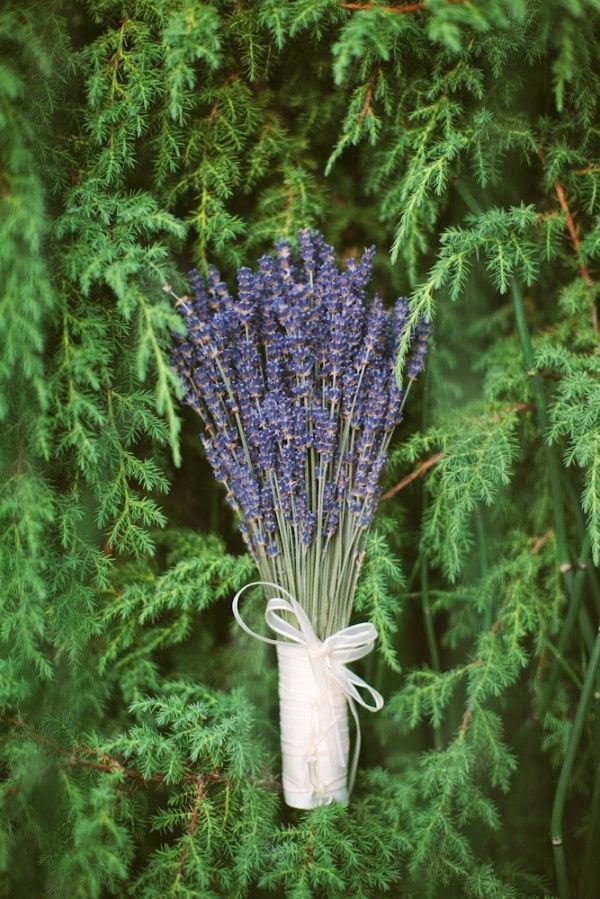
For current uses, experiment using your Munstead lavender plants for cooking, potpourris, fresh bouquets, teas, soaps and candles. To use Munstead lavender in cooking, pick when bloom has just opened, use only the flower petals. Lavender can adorn both sweet and savory dishes, but remember when cooking, that lavender is a strong herb, and a little goes a long way. If too much lavender is used, it will turn a dish or baked item very bitter. For use in soaps, shampoos, bouquets, potpourri, add either dry or fresh lavender, as it will dry with time. For a strong scent, dry lavender is best as lavender’s potency increases with drying. For a simple, yet beautiful gift, wrap a bouquet of lavender with a purple ribbon and give to your friends.